How to Prevent AI Hallucinations in Your Architecture
AI hallucinations can’t be eliminated, but they can be kept from breaking your architecture. Here is the governance pattern that constrains them.
3 min read
Can you actually prevent AI hallucinations?
Not entirely, and any answer that promises otherwise is not being straight with you. A language model is stochastic — asked the same open-ended question twice, it can answer differently, and every model will occasionally state something false with total confidence. No amount of prompting removes that at the source.
The question worth asking is narrower, and much more answerable: can you prevent a hallucination from becoming your system’s architecture? That one has a real answer — yes, if the hallucination has to pass a check before it ships, instead of being trusted on sight.
Where architecture hallucination actually comes from
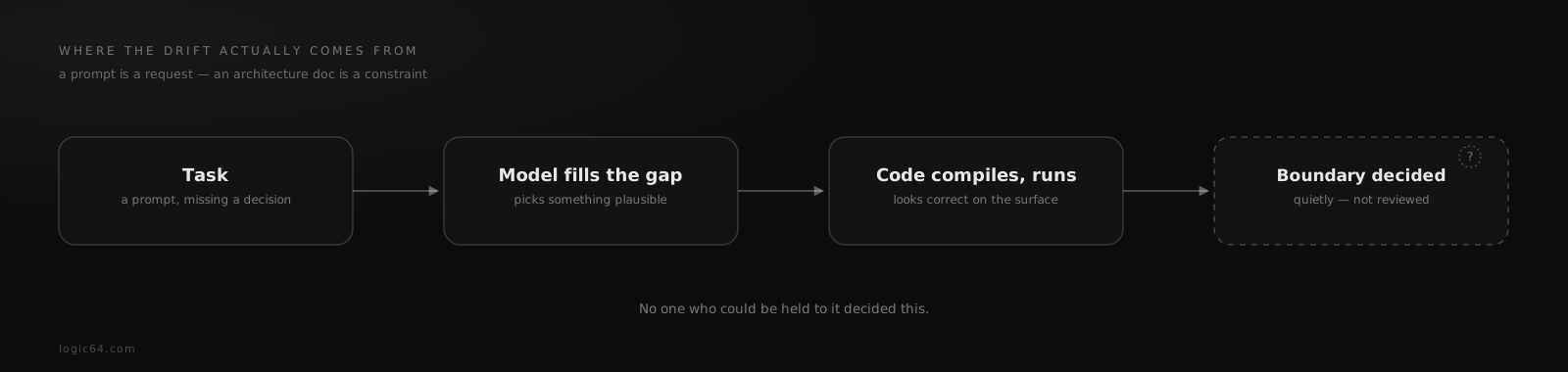
AI coding agents hallucinate architecture when they are asked to infer system boundaries from conversation alone. Most of these failures start before a single line of code is written: the model receives a task, fills in the missing architecture with something plausible, and produces files that look correct.
The generated code often compiles. It may even run. What already happened, quietly, is that the system boundary drifted — a data model, a service split, or an auth pattern got decided by the model instead of by anyone who could be held to it.
Why prompting alone cannot lock a system
A prompt is a request. An architecture document is a constraint. The two are not interchangeable, no matter how carefully the prompt is worded. If a workflow depends on the model remembering every decision it was ever told, that workflow will fail under long sessions, handoffs between people, and repeated edits.
Treat architecture as input data, not context decoration. A model that is told what already exists behaves very differently from one that is asked to guess.
The three controls that actually work
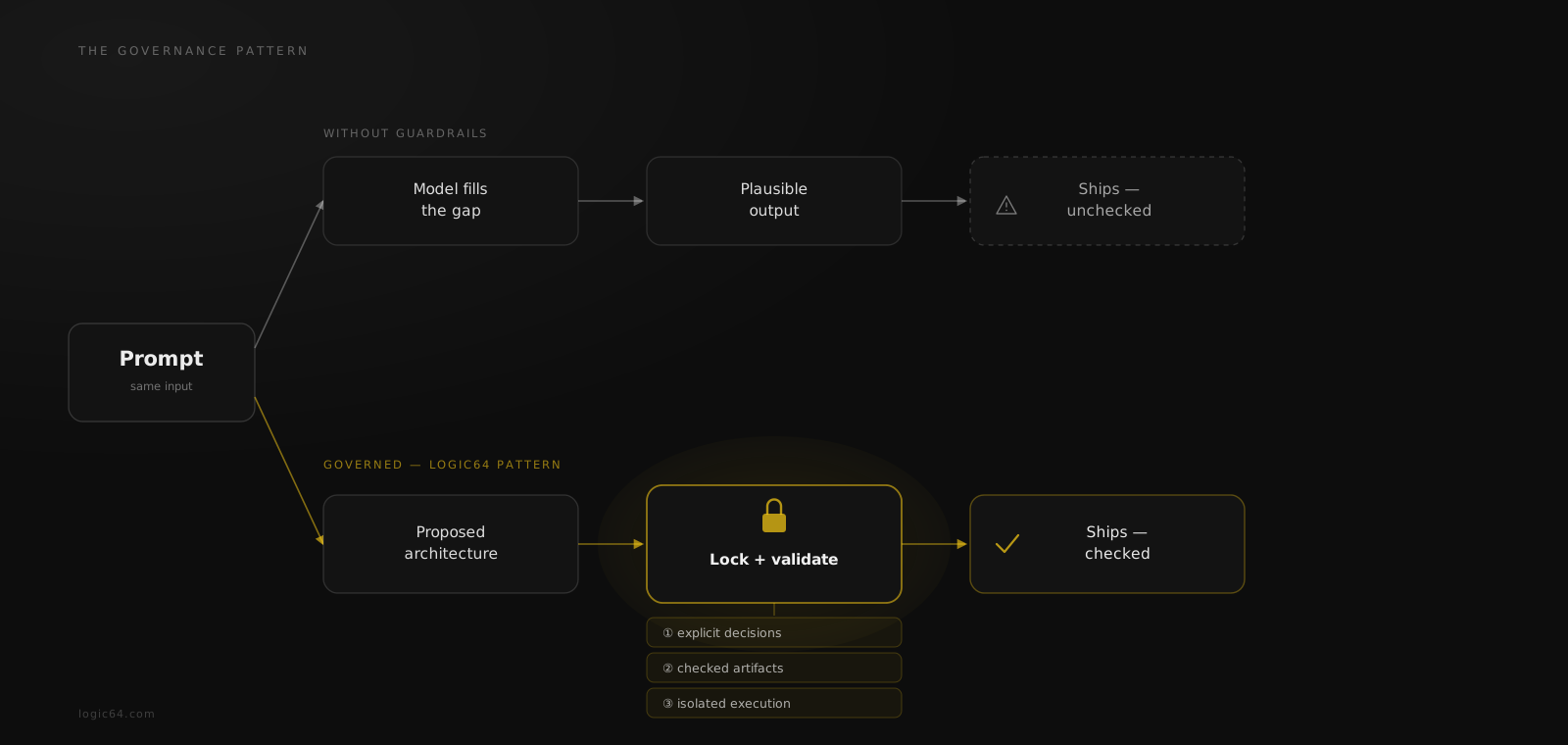
A governed AI coding workflow needs three things, and none of them are "ask the model to be careful."
- Decisions are explicit before generation starts — the stack, the boundaries, the constraints are written down, not implied.
- Generated artifacts are checked against those decisions — a schema, a routing rule, or a stack-compliance check that can actually reject a bad output.
- Execution is isolated so one request cannot pollute the next — state from a previous run should never leak into a new one.
That third control is easy to skip and expensive to skip. If one generation run shares process state with the next, a hallucinated assumption in run one can quietly seed run two — the model does not even need to repeat the mistake, the leftover state does it for you.
A practical checklist
This applies whether or not you use Logic64. Before trusting AI-generated architecture:
- Write the stack and boundaries down before generation starts — not after, as documentation.
- Give the model a way to check its own output against a schema, not just a style guide.
- Run each generation request in its own isolated process or session — never share mutable state between runs.
- Reject, don’t patch — if an output contradicts a locked decision, send it back instead of quietly fixing it by hand.
How Logic64 applies this
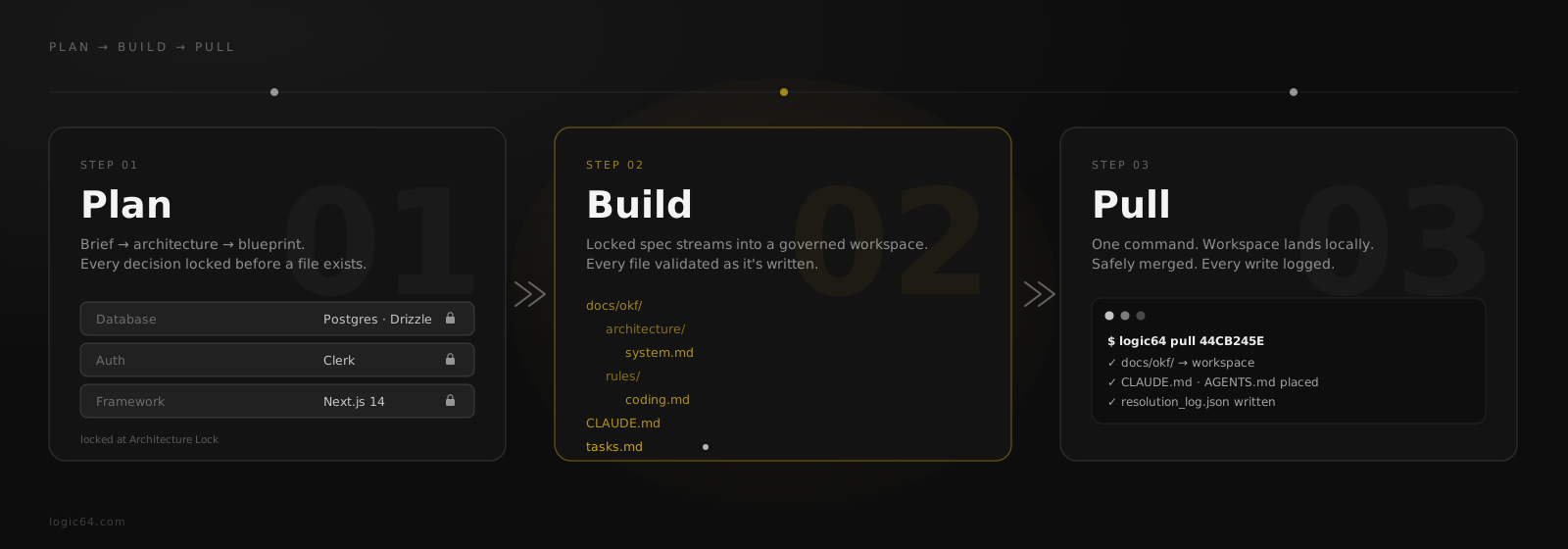
Logic64 locks architecture decisions before any code is generated, then checks generated output against those decisions rather than trusting it on sight. Each generation request also runs in its own isolated process, so one request’s state can never leak into the next.
That is the difference between raw prompting and governed generation. Raw prompting asks an AI to be careful. Governed generation gives it rails, and verifies afterward that it stayed on them.
Frequently asked questions
Can AI hallucinations be completely prevented?
Not at the model level — a language model will occasionally produce a plausible-but-wrong answer, and no prompt fully eliminates that. What you can prevent is a hallucinated assumption becoming your actual system architecture: catch it with locked decisions and validation before it ships, rather than hoping it never happens.
What is architecture hallucination in AI coding?
It is what happens when an AI coding agent is asked to build something without a defined system boundary, so it invents one — a data model, a service split, an auth pattern — that looks reasonable but was never actually decided by anyone.
How does locking a spec prevent hallucination-driven drift?
A locked spec gives the model, and any reviewer, something concrete to check output against. Instead of asking the AI to "be careful," a governed workflow can mechanically reject an output that contradicts a decision that was already made.
Related reading