Spec-Driven Development vs. Vibe Coding
Vibe coding moves fast until architecture drifts. Spec-driven development locks decisions first — here is how the two workflows actually compare.
3 min read
What is spec-driven development?
Spec-driven development means the architecture is written down and locked before an AI assistant starts changing files. The spec names the stack, services, routing rules, persistence layer, and deployment constraints — the decisions a system depends on, made explicit instead of left for the model to infer.
That changes what a coding assistant is doing. Instead of accidentally acting as the system designer — filling gaps with whatever seems reasonable in the moment — it becomes an implementation tool working inside boundaries someone actually reviewed.
What is vibe coding?
Vibe coding is the opposite starting point: prompt the assistant conversationally, look at what it produces, and keep iterating by feel. There is no written spec fixing the architecture up front — the system design gets decided implicitly, one prompt at a time, as the code gets written.
That is not automatically wrong. For a prototype, a spike, or a script you will throw away next week, deciding architecture as you go costs nothing because there is nothing at stake yet. The trouble starts when a vibe-coded first draft quietly becomes the real system.
Where vibe coding breaks down
A model asked to fill in missing architecture will pick something plausible — a data model, a service boundary, an auth pattern — and keep going. The code often compiles and even runs. What it does not do is tell you that a decision just got made on your behalf, without review, buried inside a diff.
- The same feature gets re-implemented differently by two different sessions, because neither one knew what the other one decided.
- A "temporary" data shape becomes load-bearing before anyone wrote it down.
- Security or tenancy boundaries get established implicitly, in whichever file happened to need them first.
- Onboarding a second developer — human or AI — means reverse-engineering decisions nobody documented.
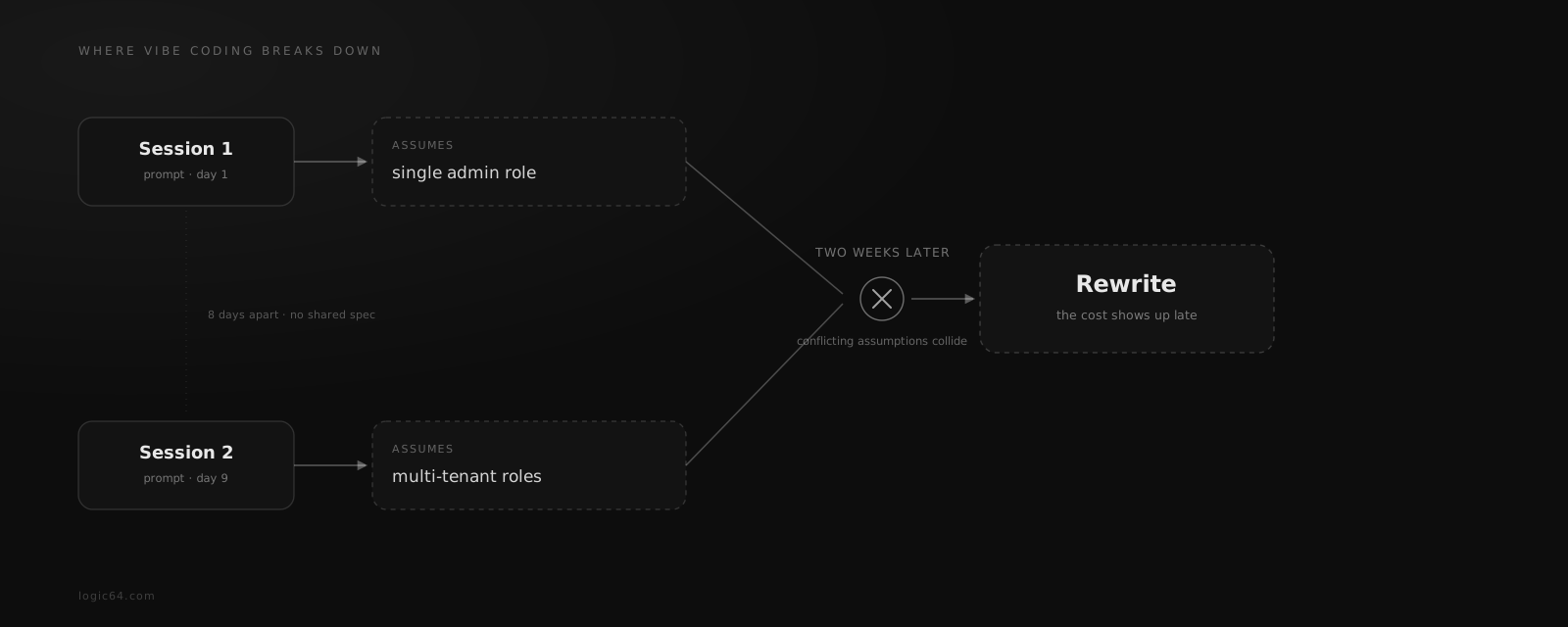
The cost of vibe coding rarely shows up in the first session. It shows up two weeks later, as a rewrite, when the assumptions two different prompts made turn out to disagree with each other.
Two workflows, compared
| Vibe coding | Spec-driven development | |
|---|---|---|
| Architecture decided by | The model, implicitly, prompt by prompt | A written, reviewed spec — before code |
| Cost of a wrong assumption | Found late, usually as a rewrite | Caught at review, before it spreads |
| Best for | Prototypes, spikes, throwaway scripts | Anything that becomes the real system |
| Assistant’s role | System designer, by accident | Implementer, working inside known boundaries |
Choose by risk, not by vibe
The honest answer is not "always spec, never vibe." It is to match the workflow to what a wrong assumption actually costs. Prototyping a UI idea or testing whether an approach is even feasible — vibe coding is often the faster, correct choice. Building the service that will hold real user data, real auth, or a real API contract — that is where an unreviewed architectural guess gets expensive.
Once a spec exists, local AI coding tools — Claude Code, Gemini CLI, OpenCode, and others — get better at their actual job. A narrow request like "add this route using the existing Fastify pattern" is easy to verify against a known structure. A broad request like "build the backend" is not, because there is no structure yet for the assistant, or you, to check the answer against.
How Logic64 fits
Logic64 turns broad product intent into a locked architecture first — brief, then architecture, then a validated blueprint, then an Architecture Lock — before any workspace is generated. After that, local coding tools edit inside the generated structure with far less room to quietly redesign it.
Frequently asked questions
What is spec-driven development?
Spec-driven development means the architecture — stack, services, routing, persistence, deployment constraints — is written down and locked before an AI assistant starts changing files. The assistant then implements inside those boundaries instead of inventing them.
What is vibe coding?
Vibe coding is prompting an AI assistant conversationally and iterating on the result by feel, without a written spec fixing the architecture first. The system design gets decided implicitly, prompt by prompt, as the code is written.
Is vibe coding always a bad idea?
No. It is a reasonable way to explore an idea, spike a prototype, or write a throwaway script — anywhere a wrong assumption costs almost nothing. It becomes a liability once the output is meant to become the real system, because nobody reviewed or locked the boundaries it quietly assumed.
Related reading